
A more accessible and welcoming start to every appointment
For many people with hearing challenges, the effort to hear clearly can begin at the reception desk.
“In any public setting, someone who is hard of hearing might experience barriers to hearing well,” says Laura Hart, an Audiologist at Hearing & Speech Nova Scotia (HSNS). “Background noise, plexiglass, and ventilation systems that most of us don’t think about can make communication more challenging right from the beginning.”
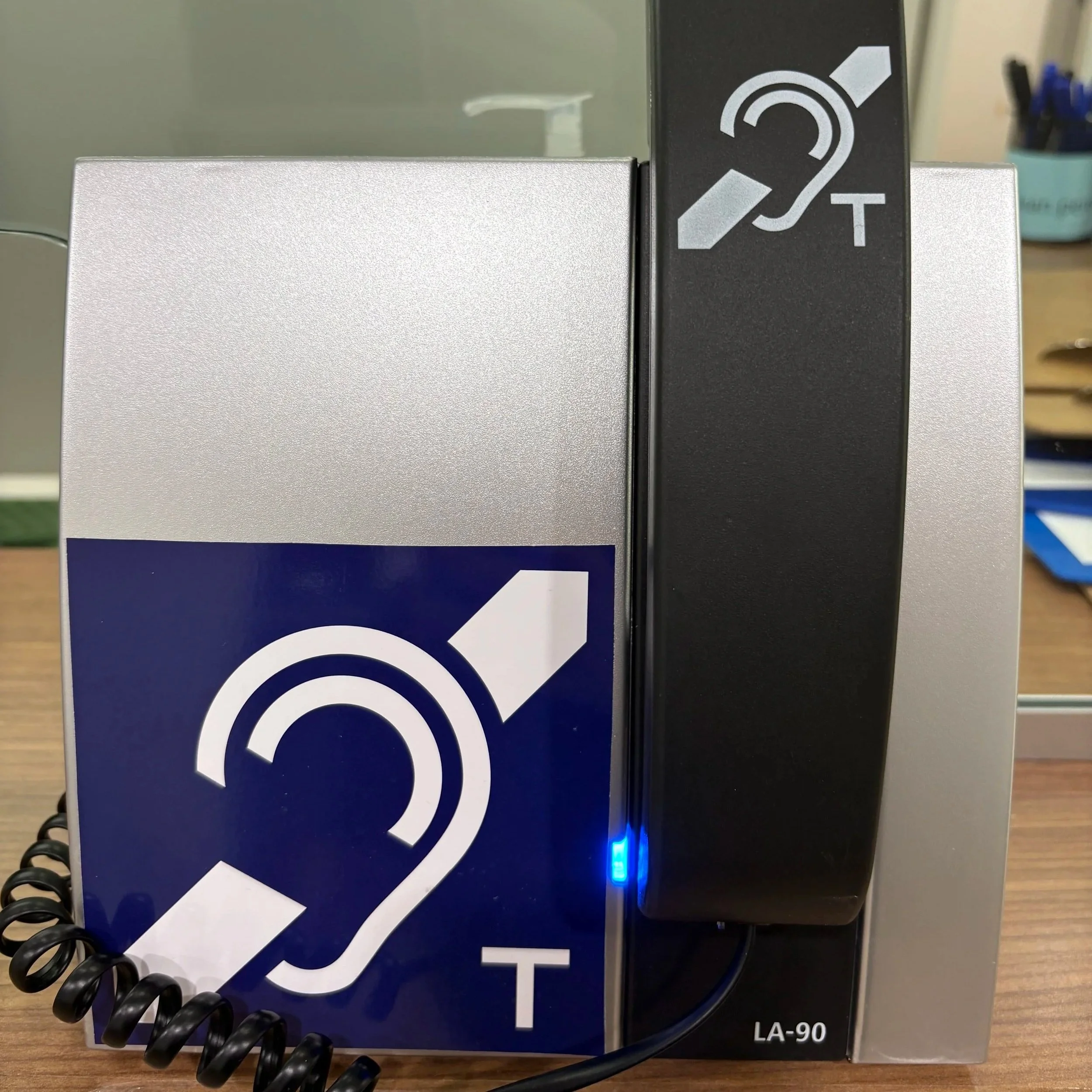
To help reduce those barriers, HSNS has introduced assistive listening devices in clinic waiting areas and care settings. The technology helps bring a speaker’s voice directly to the person listening, reducing the strain that many clients experience when trying to follow conversations in busy environments.
At reception desks, clients can pick up a small handset that brings the administrator’s voice directly to their ear, cutting through the sounds of a busy waiting room. For those who use hearing aids with telecoil settings, the system can also send the sound straight to their device. During appointments, portable microphones and headsets allow a clinician’s voice to come through clearly while filtering out background noise.
But hearing loss isn’t the only reason someone might struggle to follow conversations in busy environments. People recovering from strokes, concussions, or other conditions that affect how the brain processes sound can face similar challenges. For many clients, tools like these can turn a tiring experience into a more manageable one.
“For some people, listening takes a lot of effort,” Laura says. “When you’re in a healthcare appointment, you’re trying to learn something about your health and take in new or complex information. If most of your energy is going into just trying to hear, what you take away from that appointment isn’t as valuable as it could be.”
Reducing that listening effort can make appointments easier to navigate while also allowing staff to speak at a normal volume, which helps maintain privacy in shared clinical spaces.
“We’ve had people try the system and say they left the appointment feeling less tired,” Laura says. “It’s one less thing they have to concentrate on.”
For Laura, the initiative represents something larger than the technology itself.
“It comes back to having a space where people feel they belong,” Laura says. “If we can build accessibility into the environment so people don’t have to ask for help, that’s always the goal.”
By introducing assistive listening technology in clinic spaces, HSNS is helping ensure that from the moment clients arrive, communication is easier and appointments feel more comfortable.
“We want people to feel like they’re not only allowed in the space, but truly welcomed,” Laura says. “Even just having the equipment there sends a message that the clinic is meant for them.”